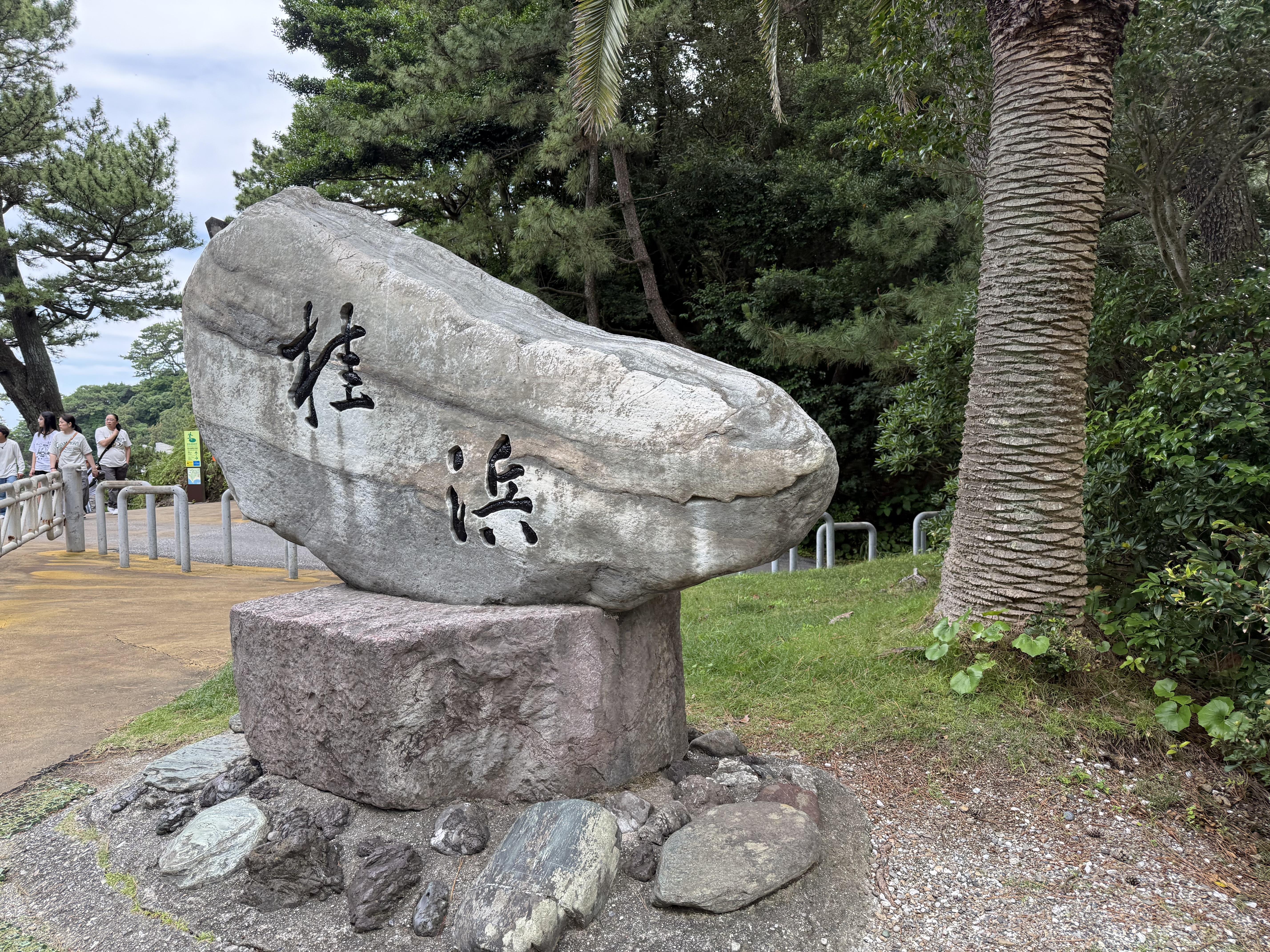
In June 2026, I flew from Tokyo to Kochi, Japan, with JAL.
I stayed at Kochi Hotel near Kochi Station for two nights and explored Kochi City by streetcar, bus, and on foot.
During the trip, I visited the Sunday Market, Kochi Castle, Yamauchi Shrine, Chikurinji Temple, Makino Botanical Garden, and Katsurahama Beach. I also enjoyed local Kochi cuisine at Hirome Market and other restaurants.
Near Kochi Castle, I also saw the clock tower of Kochi Otemae High School, which is considered one of the exterior models for the school in the Studio Ghibli film Ocean Waves.
This article introduces my two-night, three-day Kochi itinerary, transportation without a rental car, accommodation, sightseeing spots, and the food I tried.
- Kochi Travel Itinerary
- Day 3
- Flying from Tokyo to Kochi
- Staying Two Nights at Kochi Hotel
- Day 1: Harimayabashi Bridge and Hirome Market
- Day 2: Sunday Market, Yamauchi Shrine, and Kochi Castle
- 10:30: Visiting the School Featured in Ocean Waves
- 11:15: Visiting Imoya Kinjiro
- 12:30: Taking the MY Yu Bus to Chikurinji Temple and Makino Botanical Garden
- 15:40: Katsurahama Beach
- 16:50: Wakamiya Shrine
- 18:15: Dinner at Tosa Gohan Suigeitei
- 19:30: Buying Sashimi and Sushi at a Supermarket
- Day 3: Returning to Kochi Ryoma Airport
- Kochi Is Easy to Visit Without a Rental Car
Kochi Travel Itinerary
Day 1
| Time | Plan |
| 16:55 | Depart from Haneda Airport |
| 18:15 | Arrive at Kochi Ryoma Airport |
| Around 18:40 | Take the airport limousine bus toward Kochi Station |
| 19:20 | Check in at Kochi Hotel |
| 19:40 | Visit Harimayabashi Bridge |
| 19:50 | Dinner at Hirome Market |
Day 2
| Time | Plan |
| 8:45 | Visit the Sunday Market |
| 9:20 | Visit Yamauchi Shrine |
| 9:50 | Visit Kochi Castle |
| 10:30 | See the clock tower of Kochi Otemae High School |
| 11:05 | Visit the Umaji Village shop |
| 11:15 | Visit Imoya Kinjiro |
| 13:00 | Visit Chikurinji Temple |
| 13:30 | Visit Makino Botanical Garden |
| 15:40 | Visit Katsurahama Beach |
| 16:50 | Visit Wakamiya Shrine |
| 18:15 | Dinner at Tosa Gohan Suigeitei |
| 19:30 | Buy sashimi and sushi at a supermarket |
Day 3
| Time | Plan |
| Around 8:12 | Depart from Kochibashi bus stop |
| Around 8:45 | Arrive at Kochi Ryoma Airport |
| 9:35 | Depart from Kochi Ryoma Airport |
| 10:55 | Arrive at Haneda Airport |
Flying from Tokyo to Kochi
I used JAL for both flights.
The outbound flight was JL0497 from Haneda Airport to Kochi Ryoma Airport. The return flight was JL0492.
I departed from Haneda Airport at 4:55 p.m. and arrived at Kochi Ryoma Airport at 6:15 p.m.
Although I arrived in Kochi in the evening, I had already planned to stay near Kochi Station for two nights, so I could travel to the city without rushing.
Taking the Airport Bus to Kochi City
I took the airport limousine bus from Kochi Ryoma Airport toward Kochi Station.
I bought a round-trip ticket from a vending machine at the airport. The fare was 1,700 yen per person.
According to the current official information, the journey between Kochi Station and Kochi Ryoma Airport takes approximately 25 minutes. On my trip, it took about 40 minutes to reach the area around my hotel.
Bus fares, timetables, and payment methods may change, so check the official website before traveling.
Official airport limousine bus information:

Staying Two Nights at Kochi Hotel
I stayed at Kochi Hotel, located near Kochi Station.
I paid 22,400 yen for two nights.
The hotel was close to Kochi Station and nearby bus stops, making it a convenient base for sightseeing.
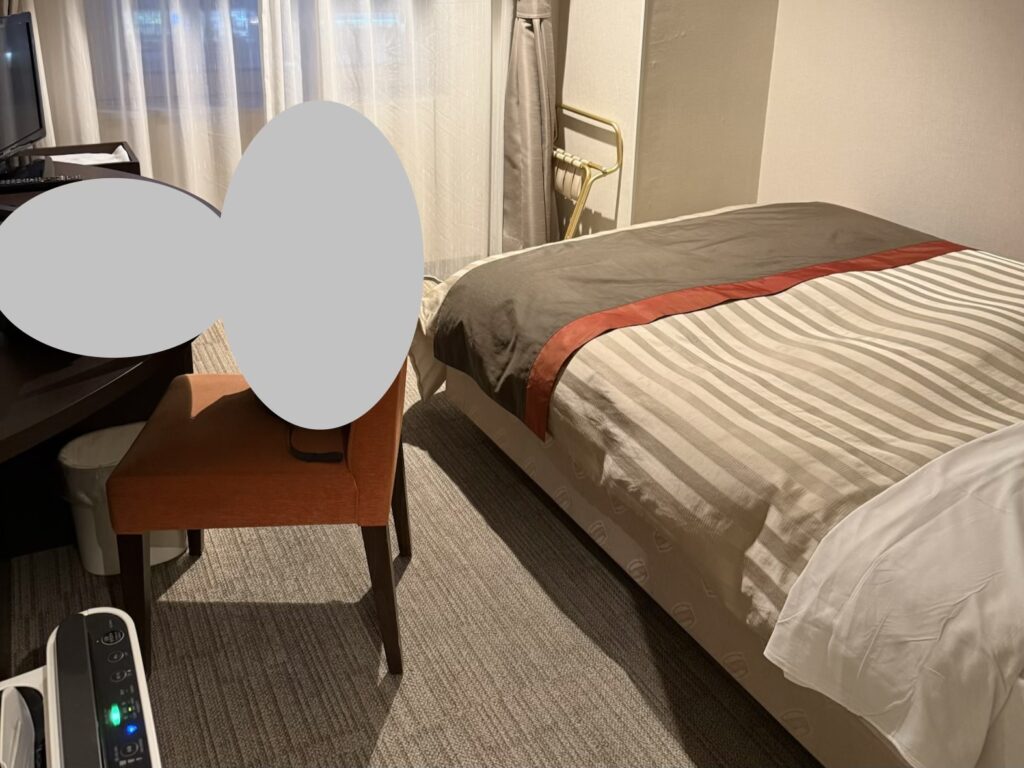
The room was compact, like a typical business hotel, but it had everything I needed and was easy to use.
After spending the day sightseeing, the room was comfortable enough to rest in.
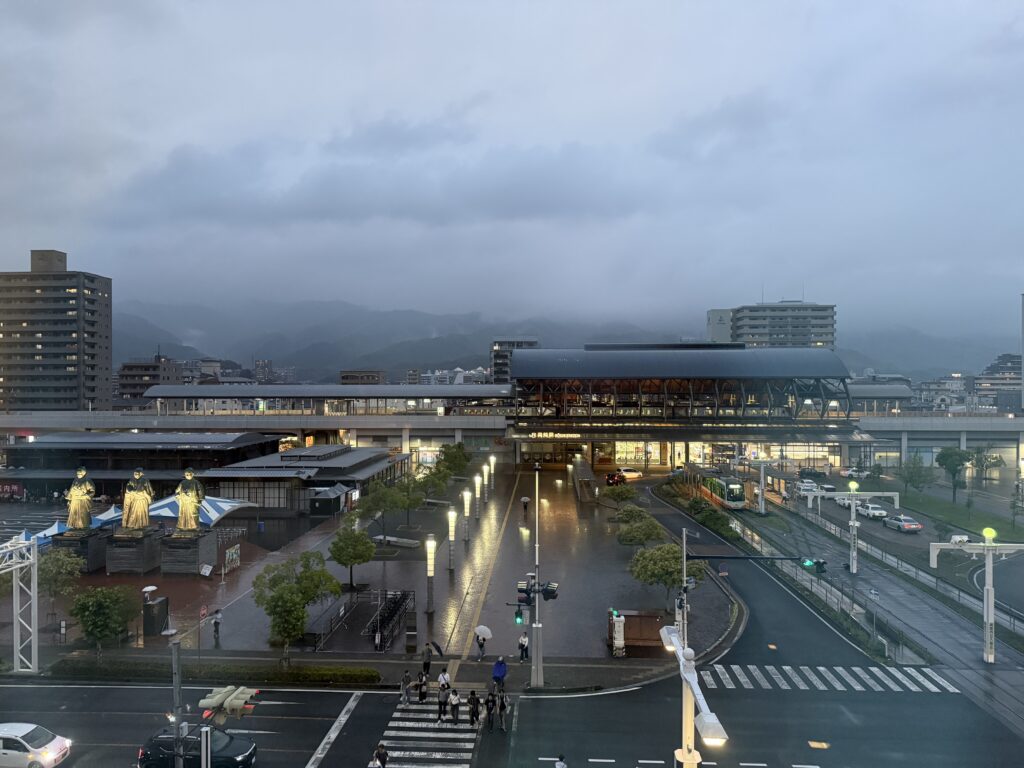
From the room, I could see the statues near the station, trains, and streetcars.
Day 1: Harimayabashi Bridge and Hirome Market
After leaving my luggage at Kochi Hotel, I went to Harimayabashi Bridge.
It is one of Kochi’s best-known sights, so I decided to visit before dinner.
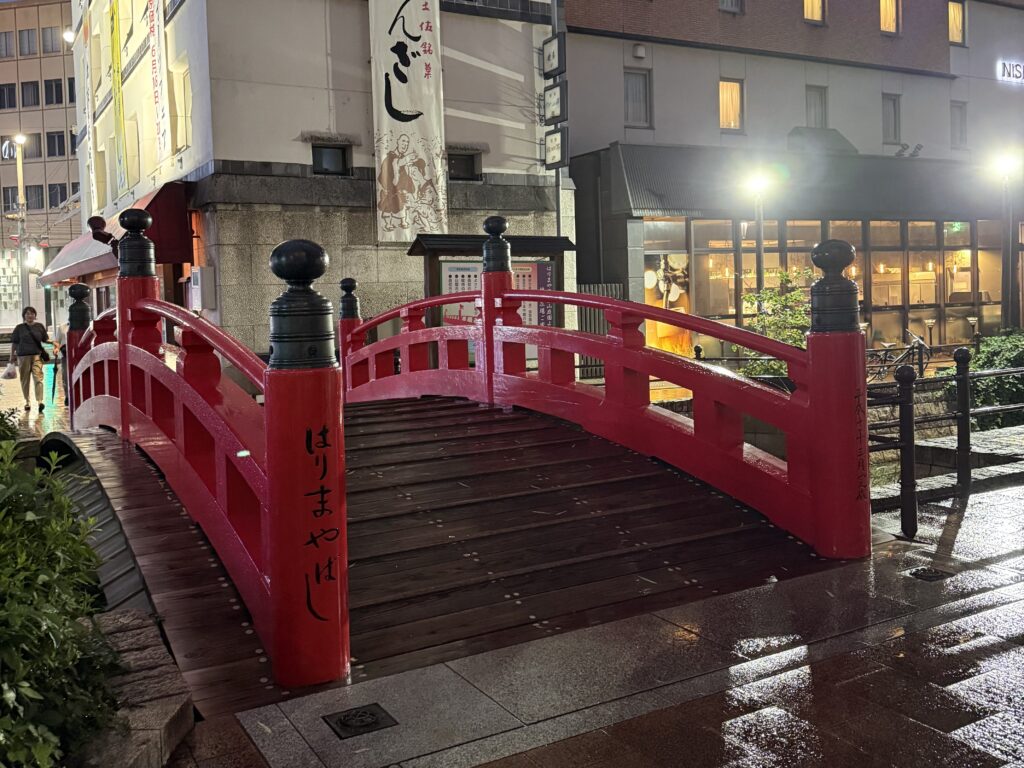
I knew that the bridge was small, but it was even smaller than I had expected.
After that, I went to Hirome Market.
Hirome Market Was Large and Crowded
Hirome Market is a large indoor market with many restaurants and food stalls.
The market was quite spacious, but it was crowded when I visited.
I was traveling alone, and I shared a table with other customers.
The seating at Hirome Market is shared and available on a first-come, first-served basis. It is best to find and secure a seat before ordering food. During busy times, it may be difficult to find a place to sit after ordering.
Outside food and drinks are not allowed inside the market. When I visited, even drinking water from my own bottle was not allowed.
Payment methods vary by vendor. Yairo-tei accepted cash only, while Myojinmaru accepted cashless payment.
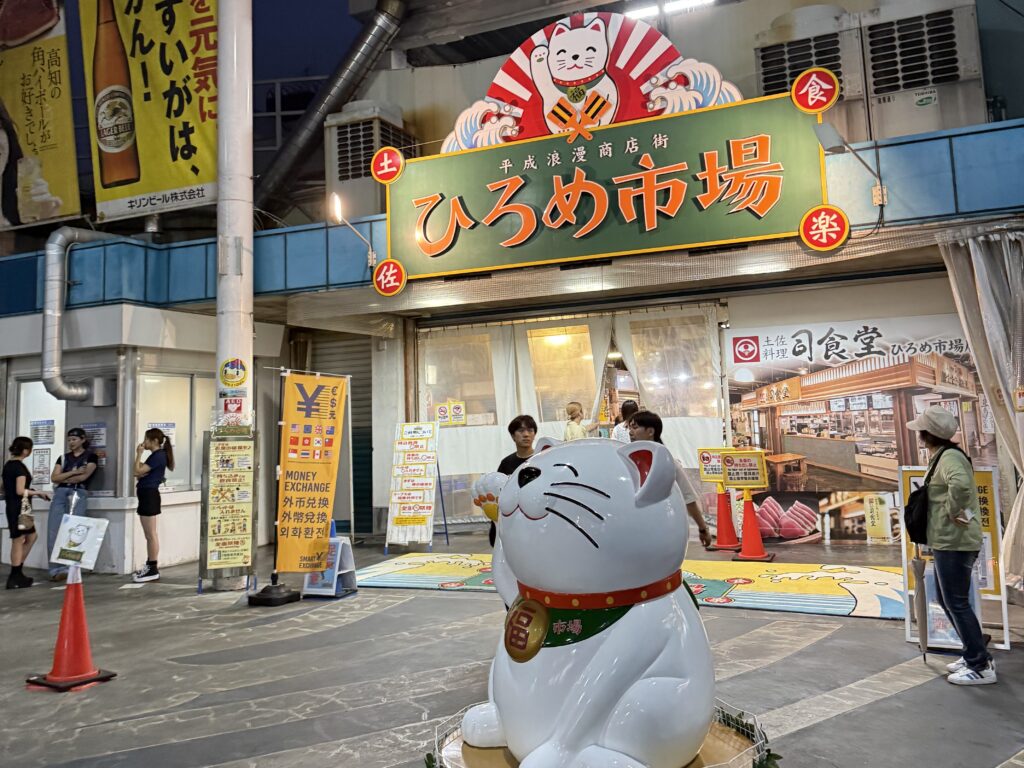
Official Hirome Market website:

Salt-Seared Bonito at Myojinmaru and Yairo-tei
At Hirome Market, I ate katsuo no shio tataki, or salt-seared bonito.
Katsuo no tataki is one of Kochi’s most famous local dishes. The surface of the bonito is seared, and it is usually served with salt and various garnishes.
I ordered salt-seared bonito at both Myojinmaru and Yairo-tei so that I could compare them.
I had to wait quite a while at Yairo-tei.
I also ordered yuzu juice and tempura made with aosa seaweed.
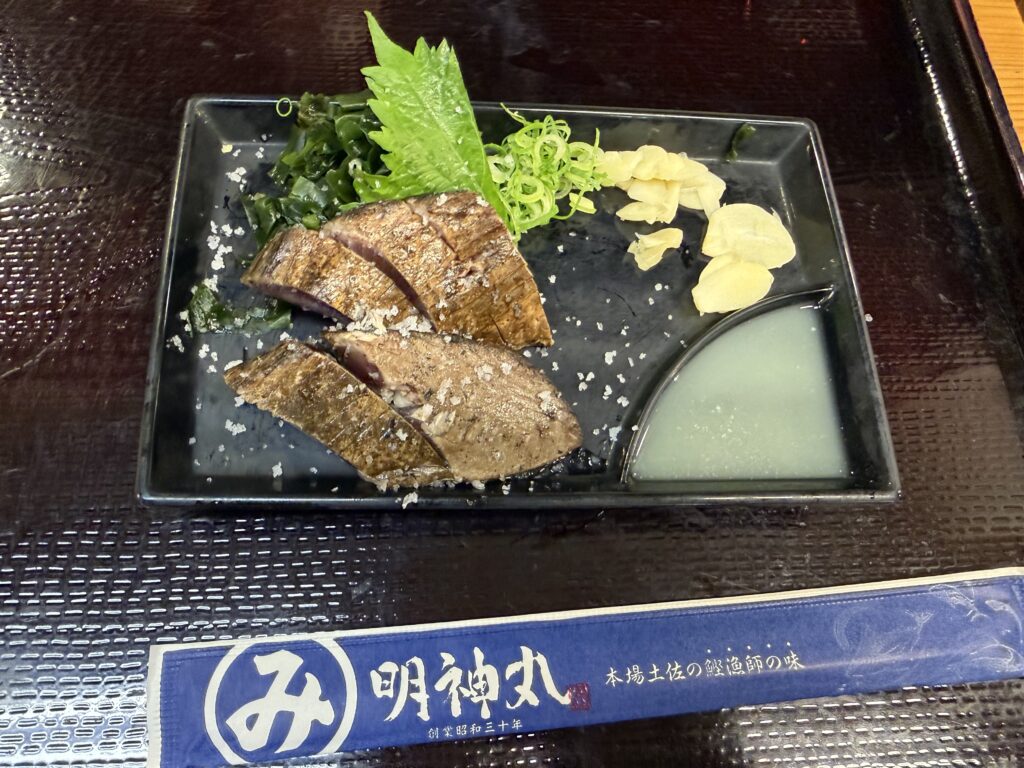
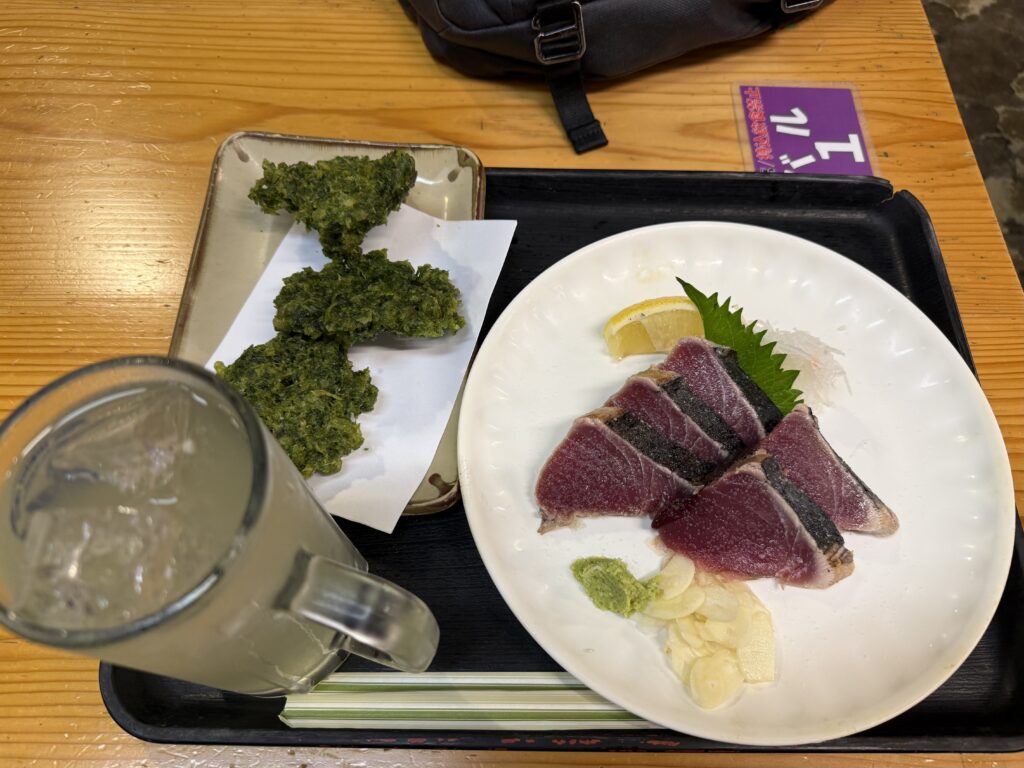
The aosa seaweed tempura was not my favorite, but it was interesting to try a local dish.
From my first dinner in Kochi, I was able to enjoy local flavors such as bonito and yuzu.
Day 2: Sunday Market, Yamauchi Shrine, and Kochi Castle
On the second day, I headed to the Sunday Market in the morning.
First, I bought a MY Yu Pass at Tosa Terrace near Kochi Station.
The MY Yu Pass
I bought the Katsurahama ticket, which cost 1,500 yen for one adult.
The MY Yu Pass is a sightseeing pass that can be used on the MY Yu Bus, a sightseeing loop bus connecting Kochi Station, Harimayabashi, Mount Godai, Makino Botanical Garden, Chikurinji Temple, and Katsurahama.
The pass also includes benefits such as free rides on streetcars within the designated city area and discounts at some tourist attractions.
It was useful because I was traveling without a rental car.
The MY Yu Pass should be purchased in advance. Seats cannot be reserved or assigned, and passengers may not be able to board if the bus is full, even if they already have a ticket.
Official MY Yu Bus information:

8:45: The Sunday Market
The Sunday Market covered a much longer distance than I had expected.
According to the official information, it is held every Sunday from around 6 a.m. to around 2 p.m. along Otemasuji Street near Kochi Castle. Approximately 300 stalls line the street for about 1 kilometer.
The market has a history of more than 300 years and is visited by both local residents and tourists.
Many people were already there in the morning, and the market was lively.
I had a yuzu drink as part of my breakfast.
I also ate fried sweet potato, a local specialty, and a popular ice cream.
Many vendors accepted cash only when I visited. Foreign travelers should carry some Japanese yen, especially if they want to buy food or souvenirs at the market.
The Sunday Market was enjoyable not only as a sightseeing spot but also as a place to have a casual breakfast while walking around.
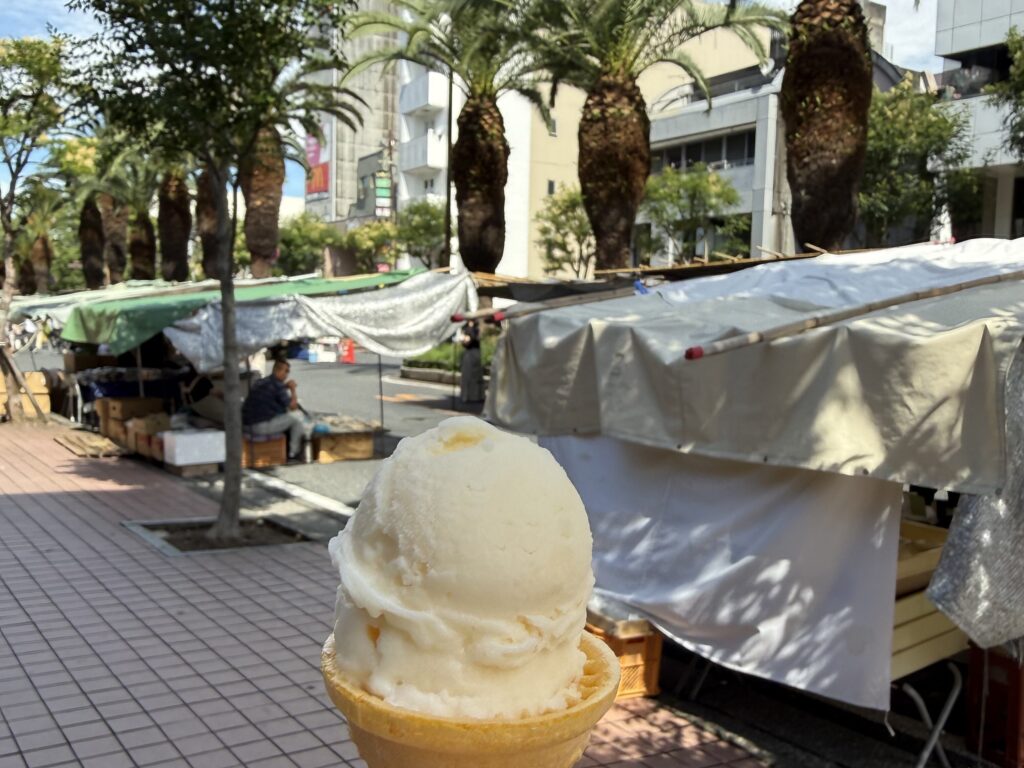
Official Sunday Market information:

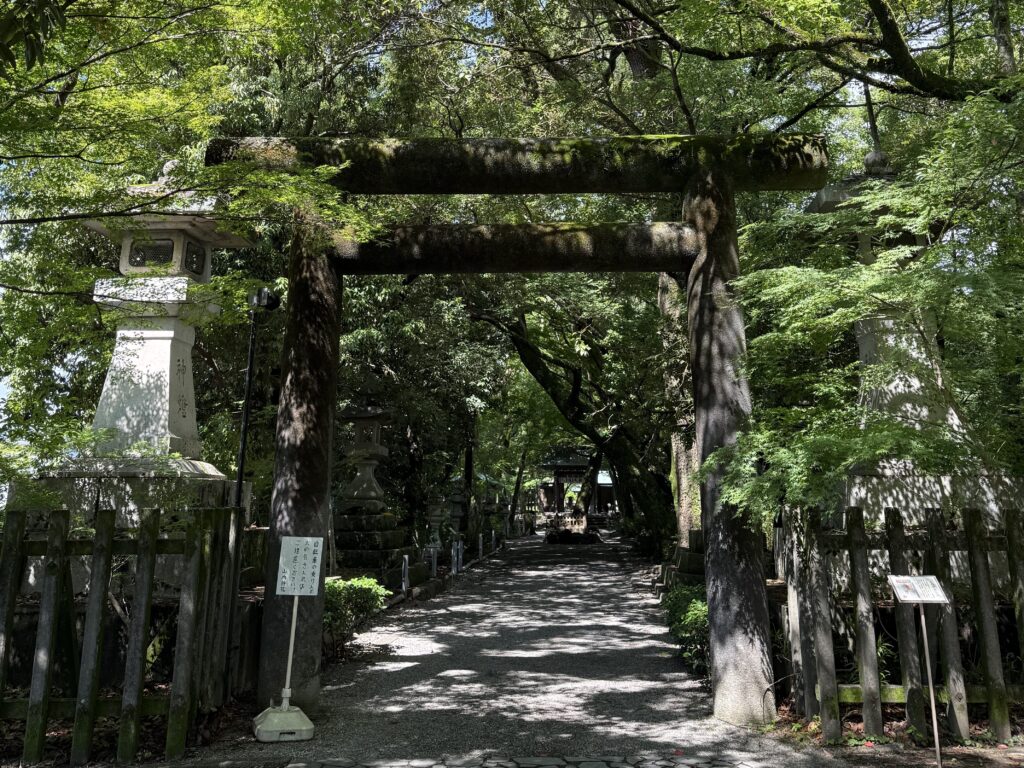
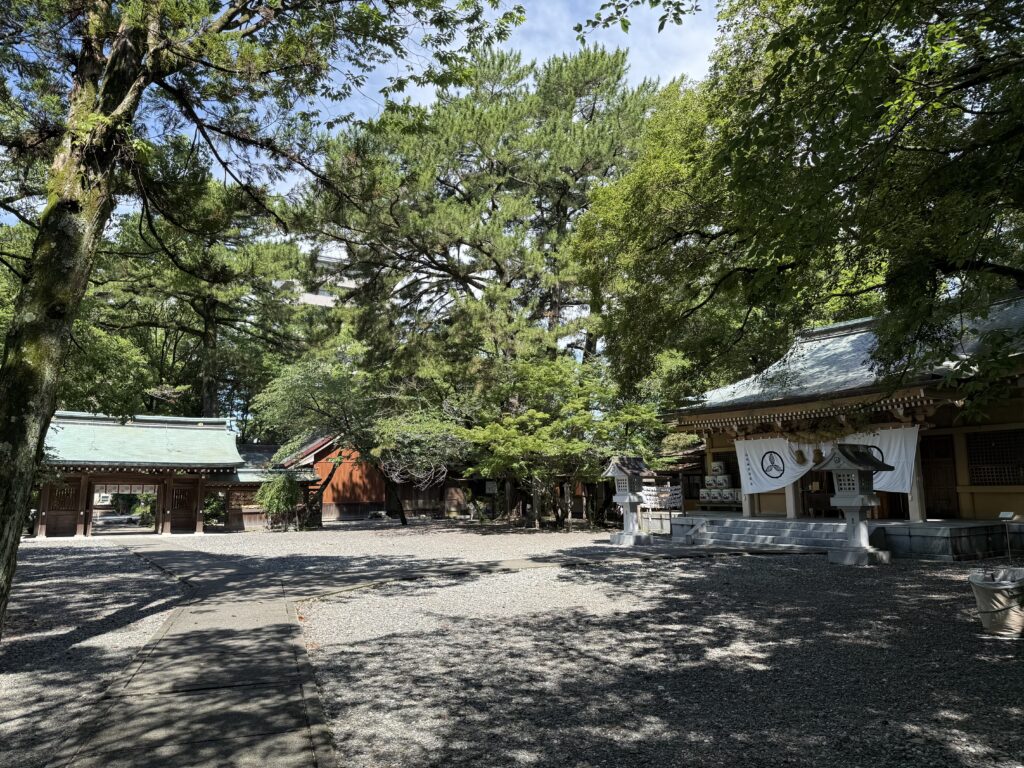
9:20: Yamauchi Shrine
I walked from the Sunday Market to Yamauchi Shrine.
The shrine was quiet and peaceful, which was a pleasant contrast to the lively Sunday Market.
Although it is within walking distance of central Kochi, it felt like a calm place where I could take my time.
9:50: Kochi Castle
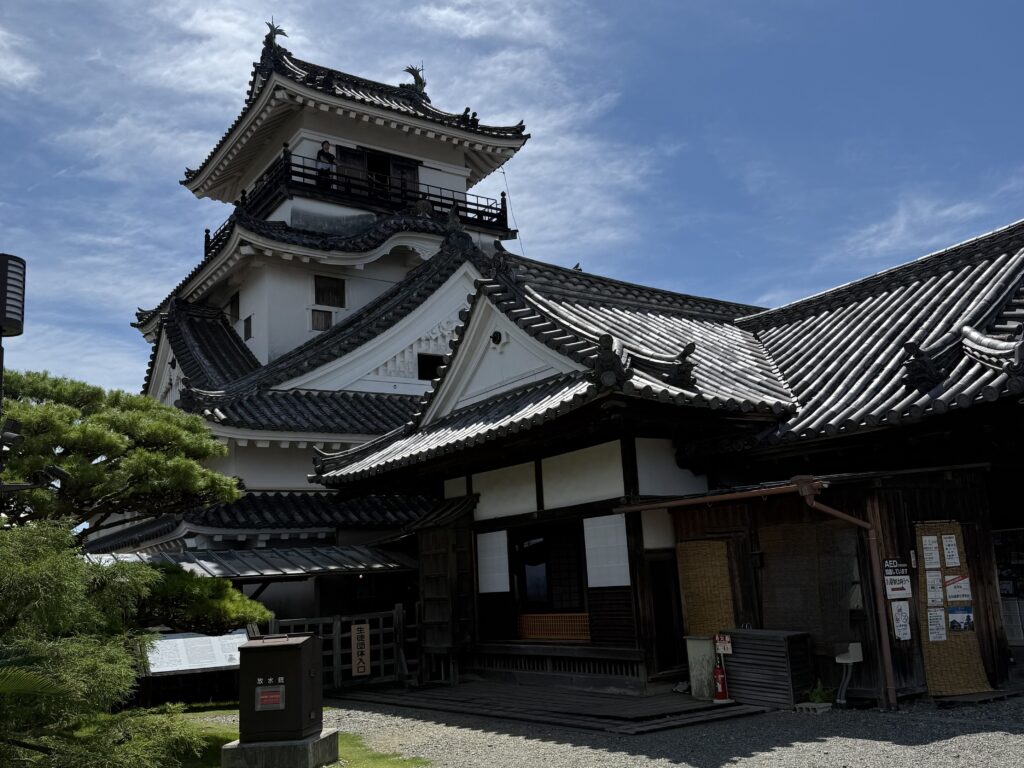
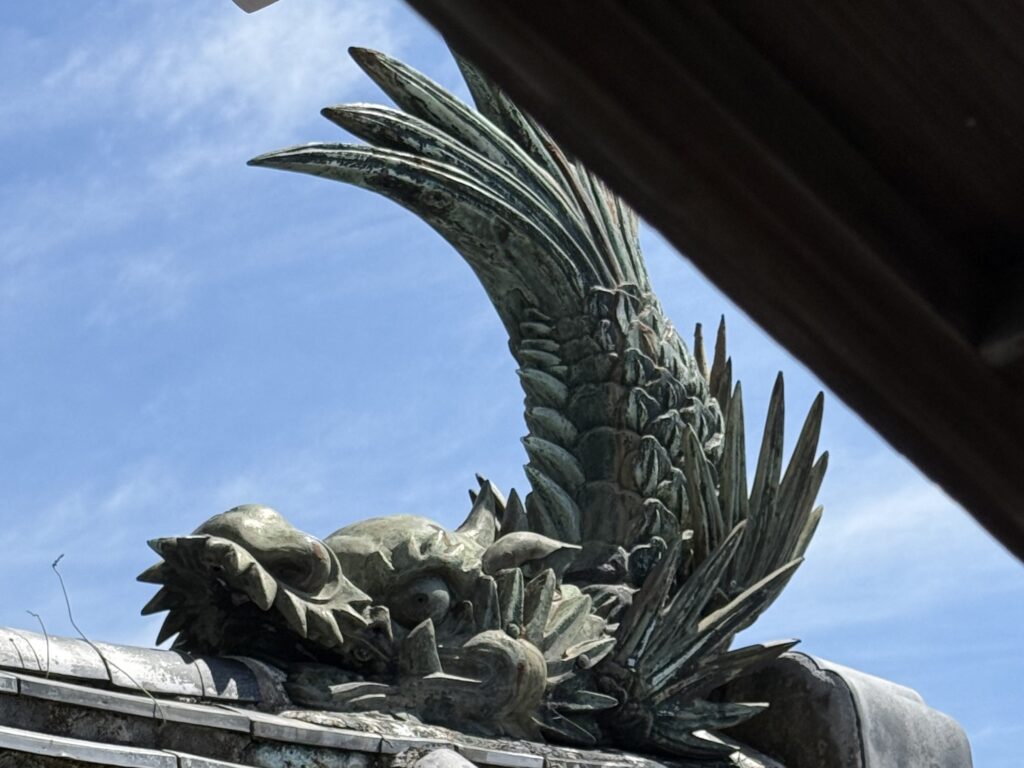
After visiting Yamauchi Shrine, I went to Kochi Castle.
Kochi Castle is one of the city’s most famous tourist attractions, so I wanted to see it for myself.
It was an impressive castle, although I personally felt that it was a little smaller than I had imagined.
I could see a high school with a distinctive clock tower from Kochi Castle.
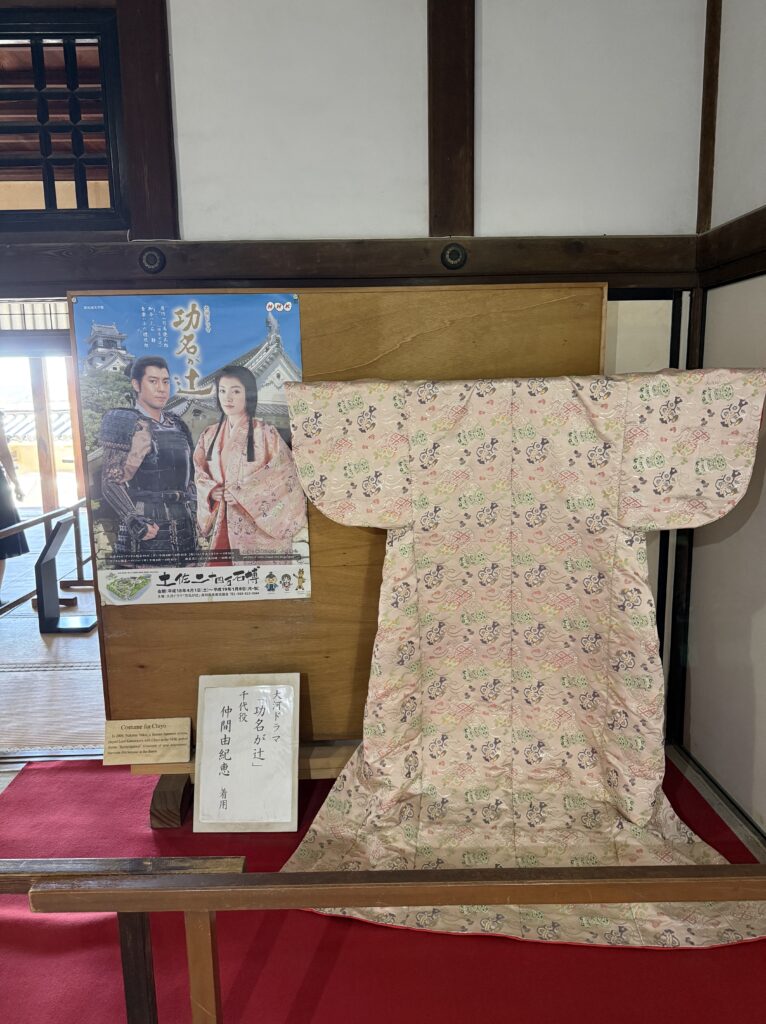
I had watched the Japanese historical television drama Kōmyō ga Tsuji, so seeing the castle brought back memories.
10:30: Visiting the School Featured in Ocean Waves
Kochi Otemae High School, located near Kochi Castle, is considered one of the exterior models for the high school attended by the characters in the Studio Ghibli film Ocean Waves.
Before visiting Kochi, I had completely forgotten that Ocean Waves was set in Kochi.
While walking around the city, I kept feeling that some of the scenery looked familiar. When I saw the distinctive clock tower from Kochi Castle, I finally remembered that Kochi was connected to the film.
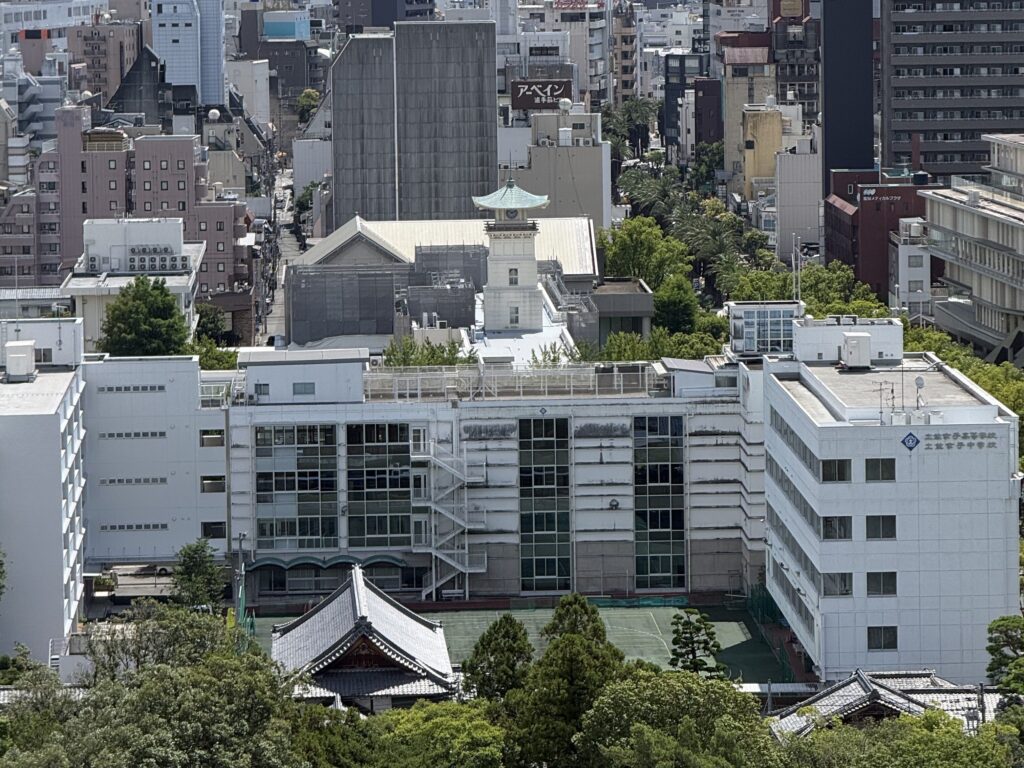
The school was under construction when I visited, but I was glad that I could still see the clock tower.
Because it is an active high school, I did not enter the grounds. I viewed the clock tower from outside.
Visitors should avoid entering the school grounds without permission and should not photograph students.
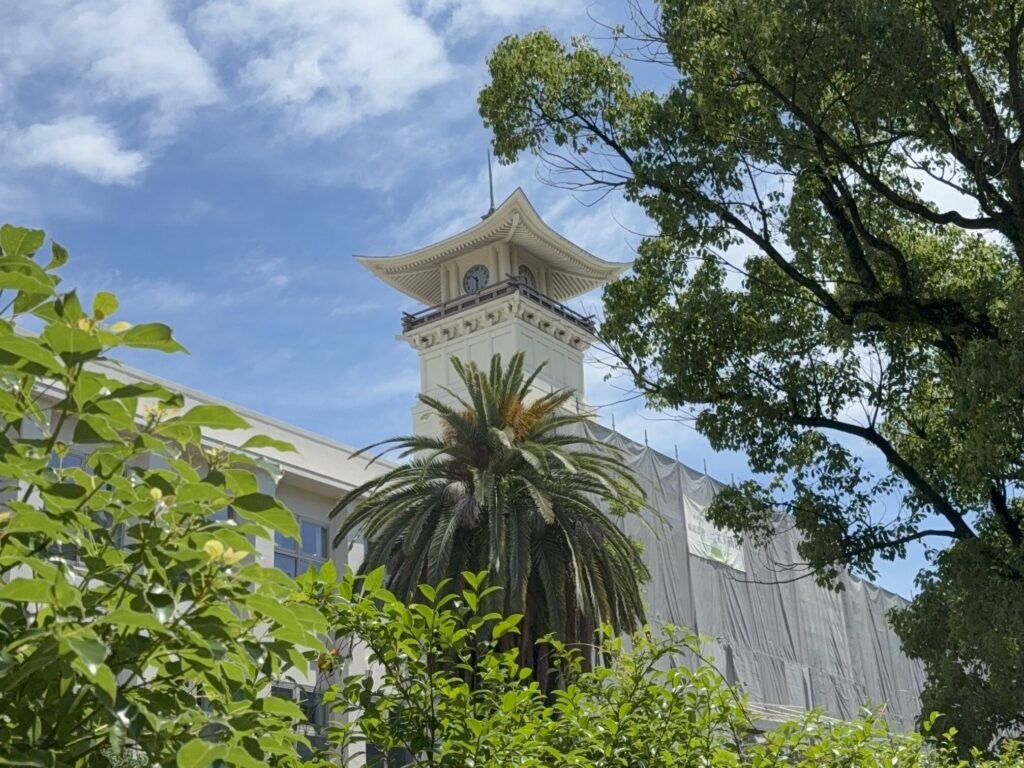
I had not planned the trip specifically as a film-location visit, so it was memorable to recognize the location while I was there.
11:15: Visiting Imoya Kinjiro
After visiting Kochi Castle, I headed to Imoya Kinjiro.
I used a streetcar and walked part of the way, but the distance was quite long.
I hardly saw anyone walking along this route, so I do not recommend walking all the way from Kochi Castle.
Eating a Parfait at Imoya Kinjiro
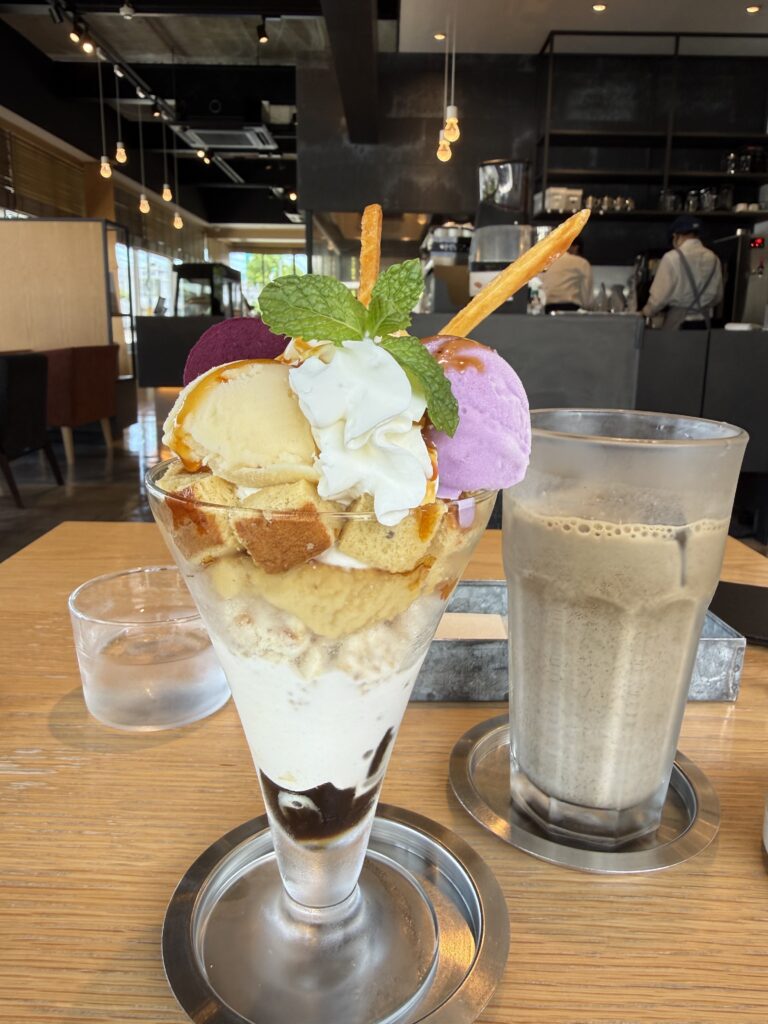
Imoya Kinjiro also has shops in Tokyo, and I often buy its products. It is one of my favorite shops, so I wanted to try a parfait at the Kochi location.
The shop is a little away from the main tourist attractions, but I decided to visit anyway.
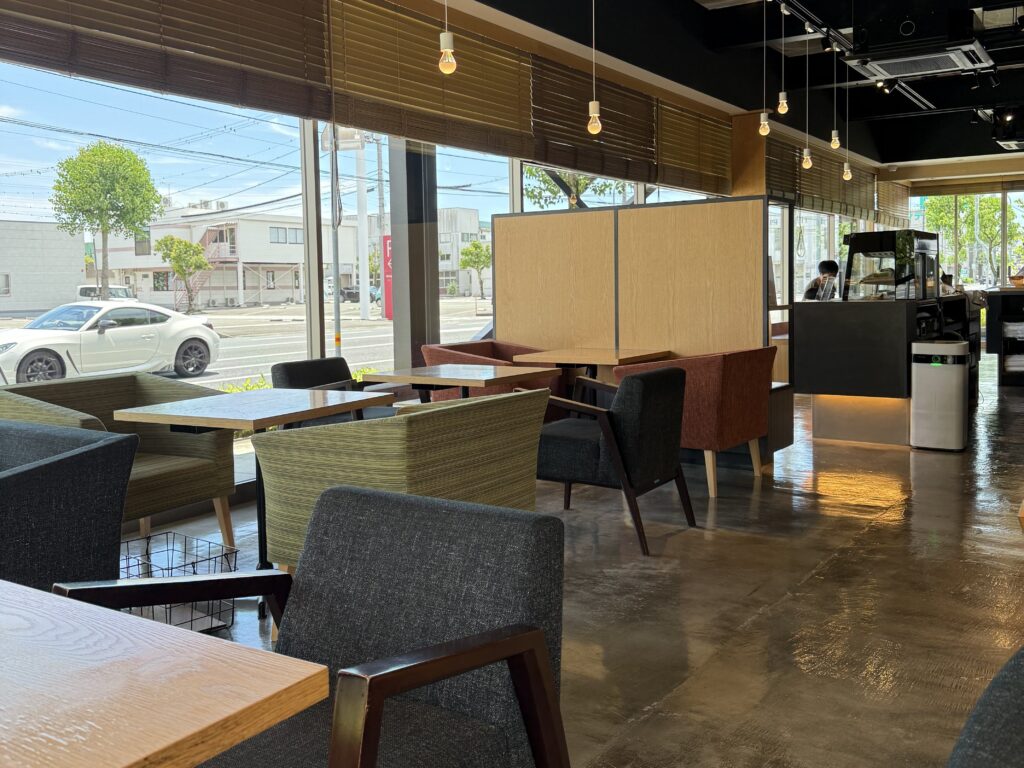
I expected the café to be crowded, but I was the only person using the café space when I visited.
It was a pleasant break during a busy day of sightseeing.
Drinking Gokkun from Umaji Village
There was an Umaji Village products shop along the way, so I stopped there and had a drink called Gokkun.
Gokkun is a yuzu-based drink from Umaji Village.
I have liked it for a long time and used to order it online.
I was happy to drink it in Kochi, where it is produced.
12:30: Taking the MY Yu Bus to Chikurinji Temple and Makino Botanical Garden
After returning to Kochi Hotel, I took the MY Yu Bus from the station area toward Mount Godai.
Many people boarded near Harimayabashi, but I had boarded at the starting point, so I was able to get a seat.
13:00: Chikurinji Temple
The first place I visited was Chikurinji Temple.
Chikurinji is Temple No. 31 of the Shikoku 88-temple pilgrimage.
According to its history, the temple was founded in 724 by the monk Gyoki on the order of Emperor Shomu. Gyoki chose this location because it resembled Mount Wutai in China.
The temple’s principal object of worship is Monju Bosatsu, the bodhisattva of wisdom, and Chikurinji is also known as a temple associated with learning.
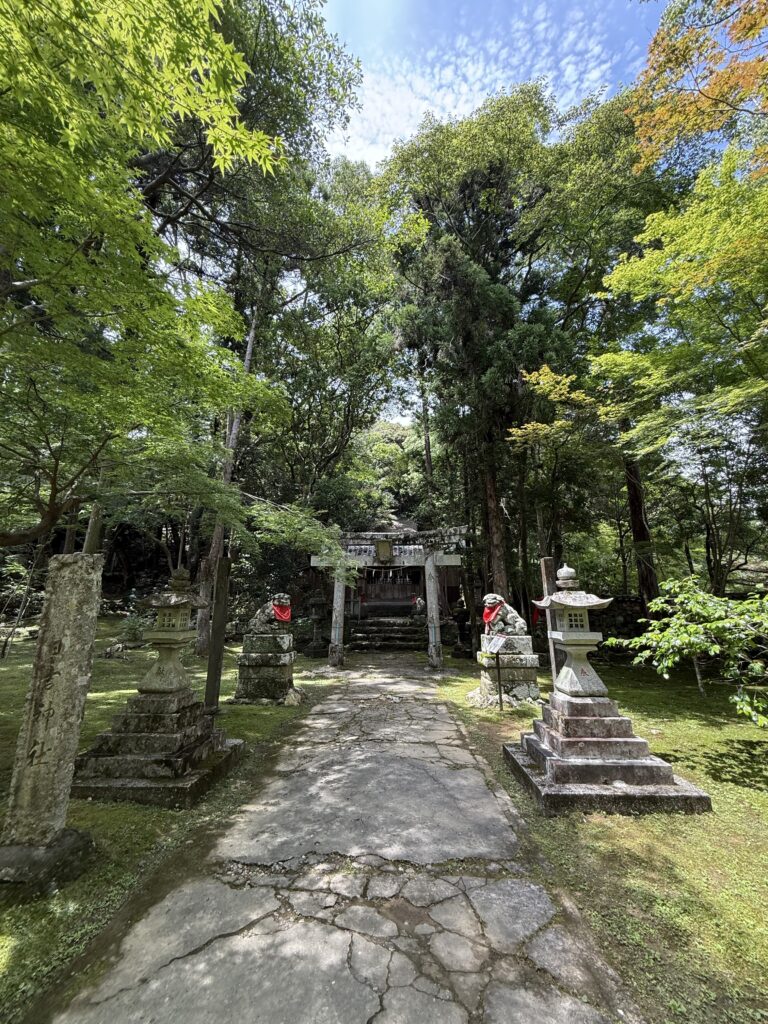
The grounds were peaceful and beautiful.
While visiting the temple, I also saw people taking part in the Shikoku pilgrimage.
It was memorable to experience not only Kochi’s tourist attractions but also the pilgrimage culture of Shikoku.
Official Chikurinji Temple website:

13:30: Makino Botanical Garden
After visiting Chikurinji Temple, I walked to Makino Botanical Garden.
The garden was much larger and more interesting than I had expected.
There were many paths where visitors could walk among the plants, and it was a place where I could spend plenty of time.
There was also an indoor exhibition about the life of Tomitaro Makino, a famous Japanese botanist.
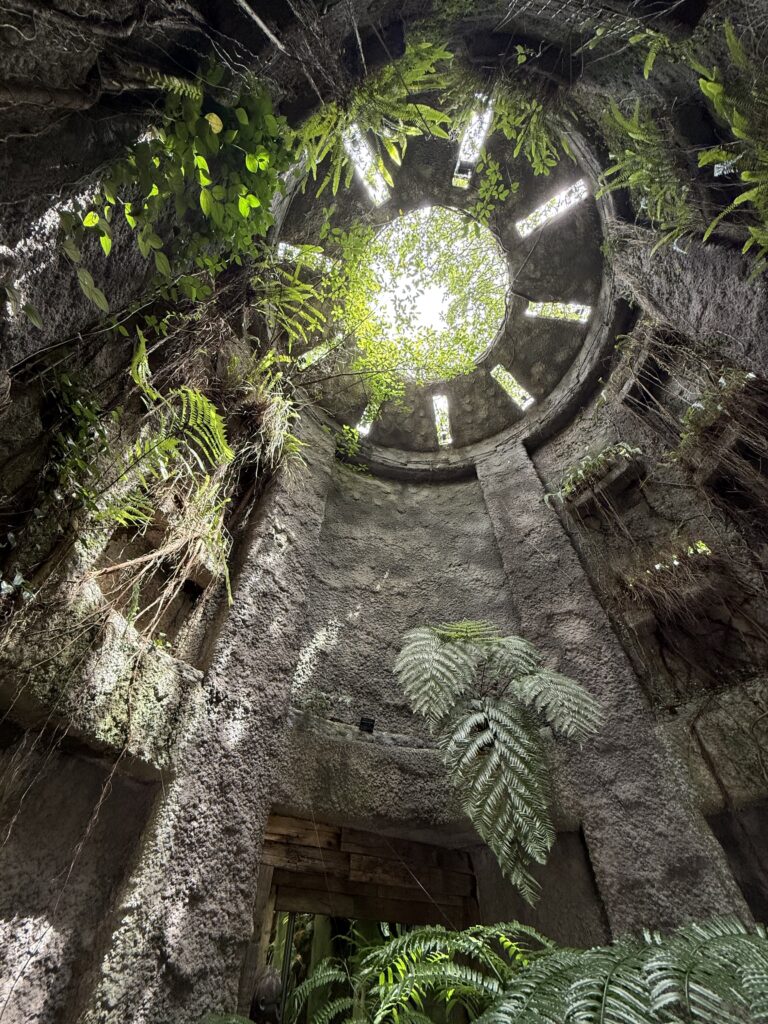
Some areas reminded me of the well-like structure at Quinta da Regaleira in Portugal.
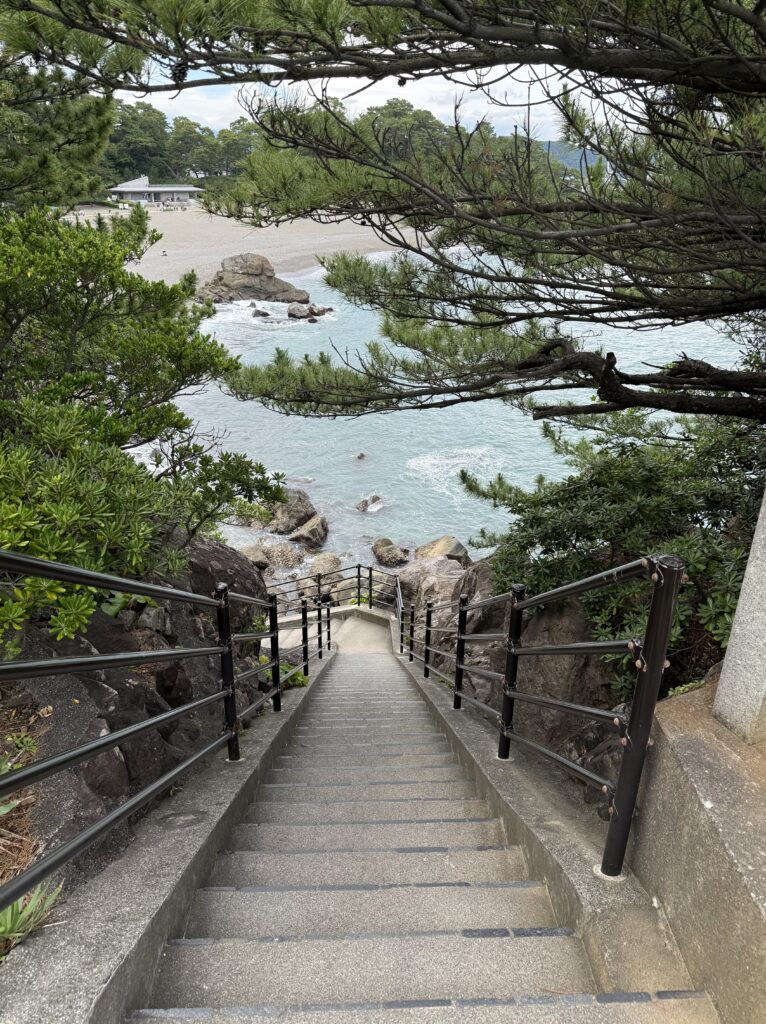
15:40: Katsurahama Beach
After visiting Makino Botanical Garden, I took another bus to Katsurahama Beach.
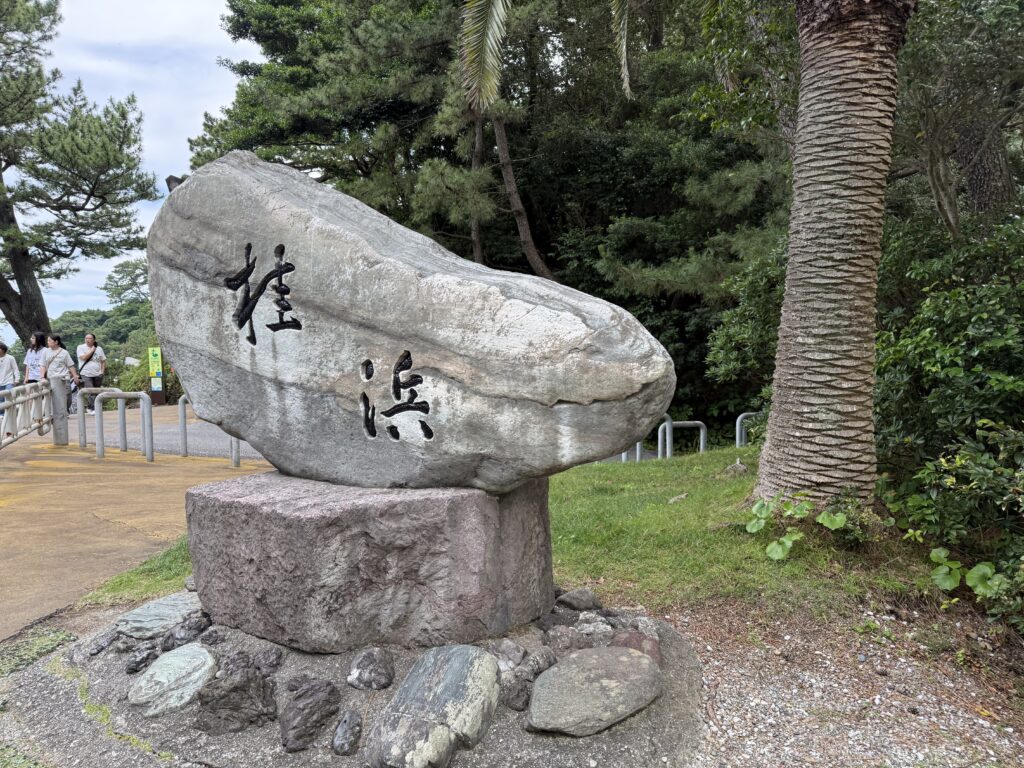
Katsurahama was exactly what I had imagined.
I walked along the beach and enjoyed the surrounding scenery.
I also visited a shrine nearby.
Katsurahama is one of Kochi’s most famous tourist attractions, so I was glad to visit it in person.
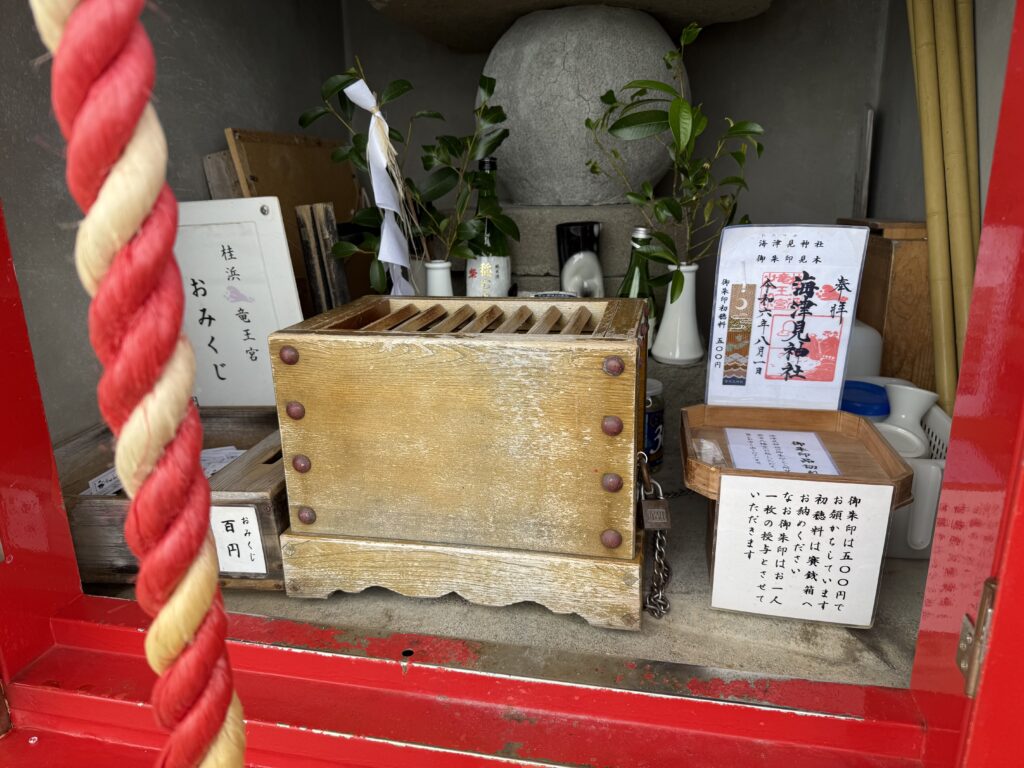
Ryugu Shrine
I also visited Ryugu Shrine, which is located in the opposite direction from the statue of Sakamoto Ryoma.
The shrine had run out of goshuin sheets when I visited.
A goshuin is not simply a souvenir stamp.
It is a handwritten and stamped record of a visit to a Japanese shrine or temple. Its origins are believed to be connected to certificates that were given to people who offered copied Buddhist sutras to temples and shrines during the Nara and Heian periods.
Over time, these certificates came to be given as proof of a visit even when visitors did not submit a copied sutra.
From the Meiji period onward, the development of railways made temple and shrine pilgrimages more common, and collecting goshuin became increasingly popular.
For this reason, a goshuin is connected to religious devotion, worship, and pilgrimage history rather than being merely a tourist stamp.
16:50: Wakamiya Shrine
I took a bus from Katsurahama to Wakamiya Shrine.
I had hoped to receive a goshuin at Ryugu Shrine, but it was sold out. I received a goshuin at Wakamiya Shrine instead.
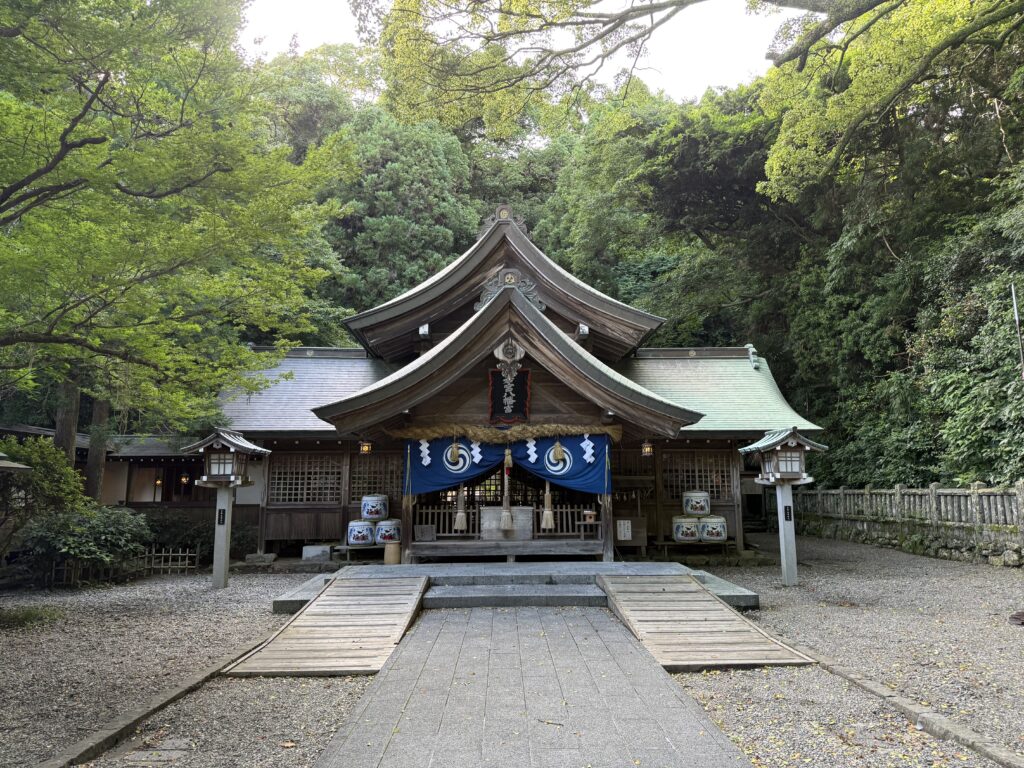
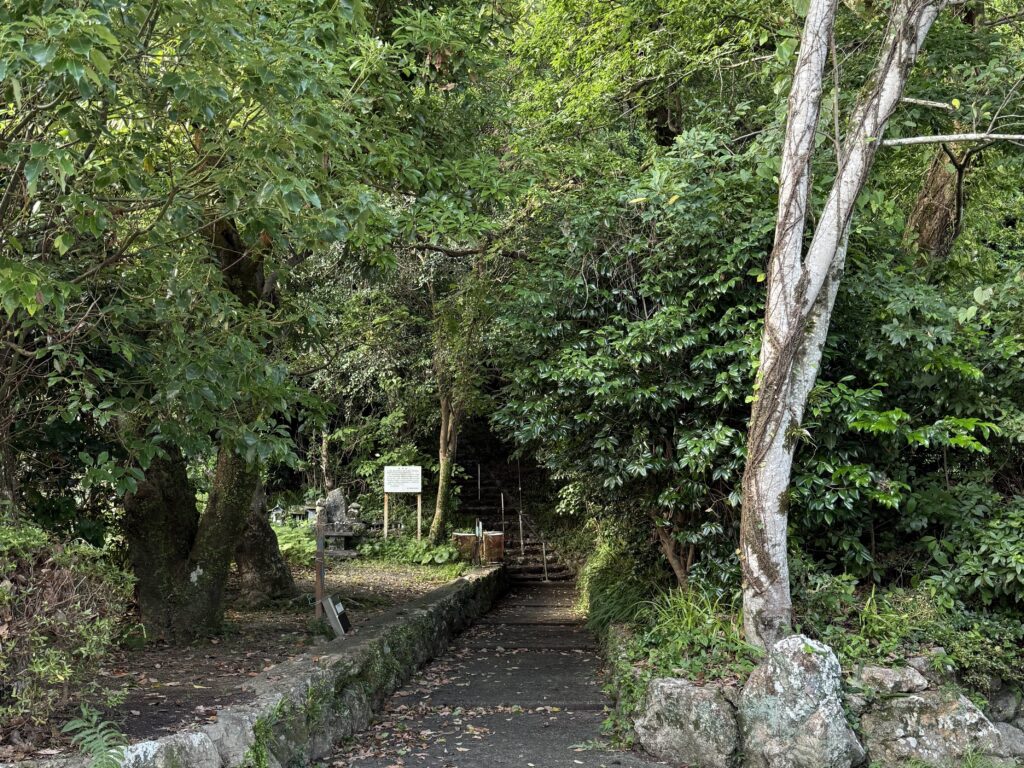
The grave of Chosokabe Motochika is located near Wakamiya Shrine.
I walked toward the entrance, but the path appeared to lead through a dense and dark forest. I became a little nervous and decided not to continue.
When traveling alone, I think it is also important not to force yourself into situations that make you uncomfortable, so I turned back.
18:15: Dinner at Tosa Gohan Suigeitei
After visiting Wakamiya Shrine, I took a bus to the area near Tosa Gohan Suigeitei.
Orders were placed using a touchscreen at the table.
Cashless payment was available, which made the restaurant convenient for international visitors. However, payment methods can change, so it is best to check when visiting.
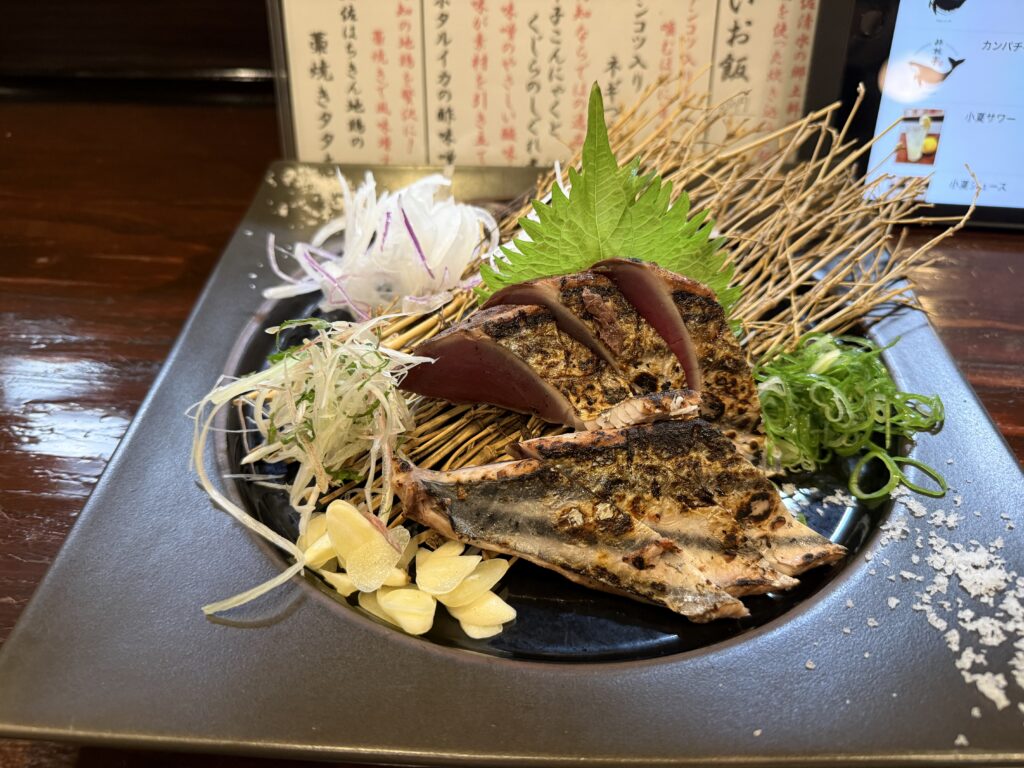
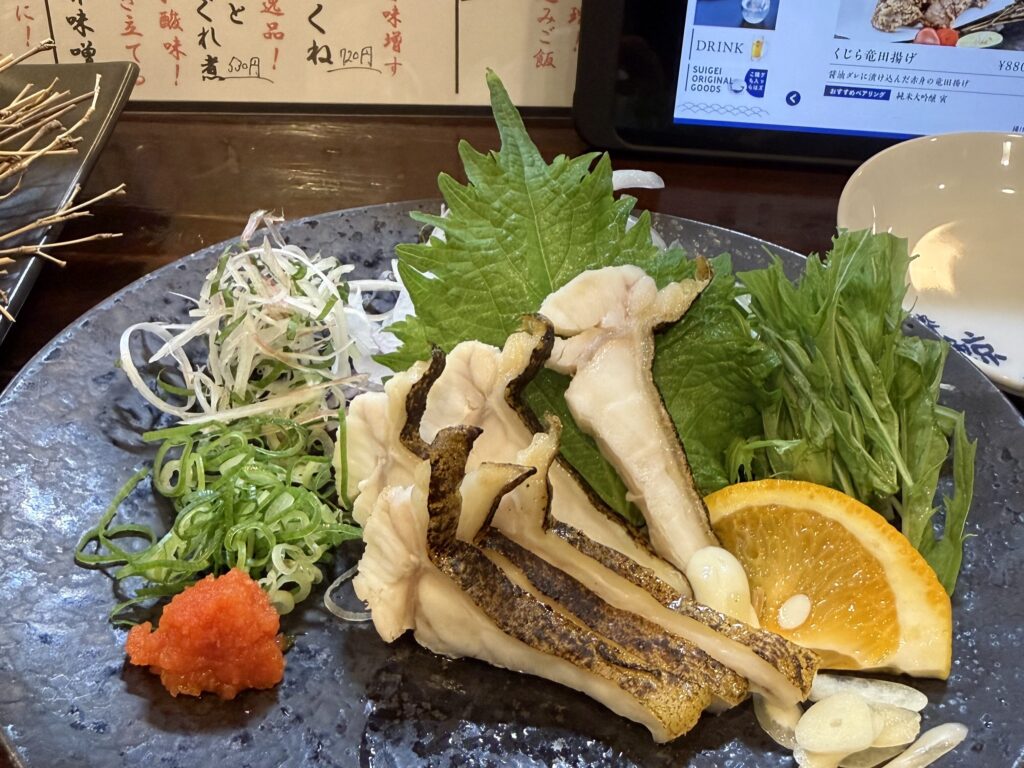
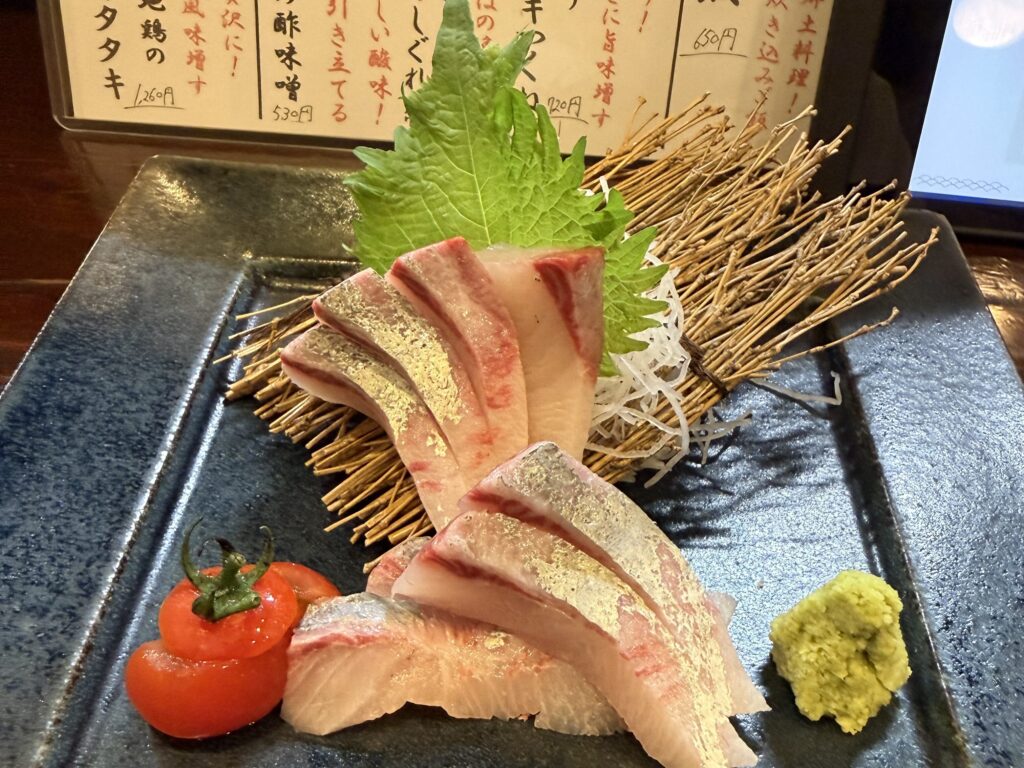
For dinner, I ordered the following dishes:
- Salt-seared bonito
- Tempura made with corn
- Moray eel, known in Japanese as utsubo
- Amberjack
I had already eaten salt-seared bonito at Hirome Market, but I enjoyed another Kochi specialty at dinner.
This was my first time eating moray eel.
My favorite dish was the amberjack. It was rich and fatty, and I enjoyed it very much.
19:30: Buying Sashimi and Sushi at a Supermarket
After dinner at Suigeitei, I was still a little hungry, so I stopped at a supermarket.
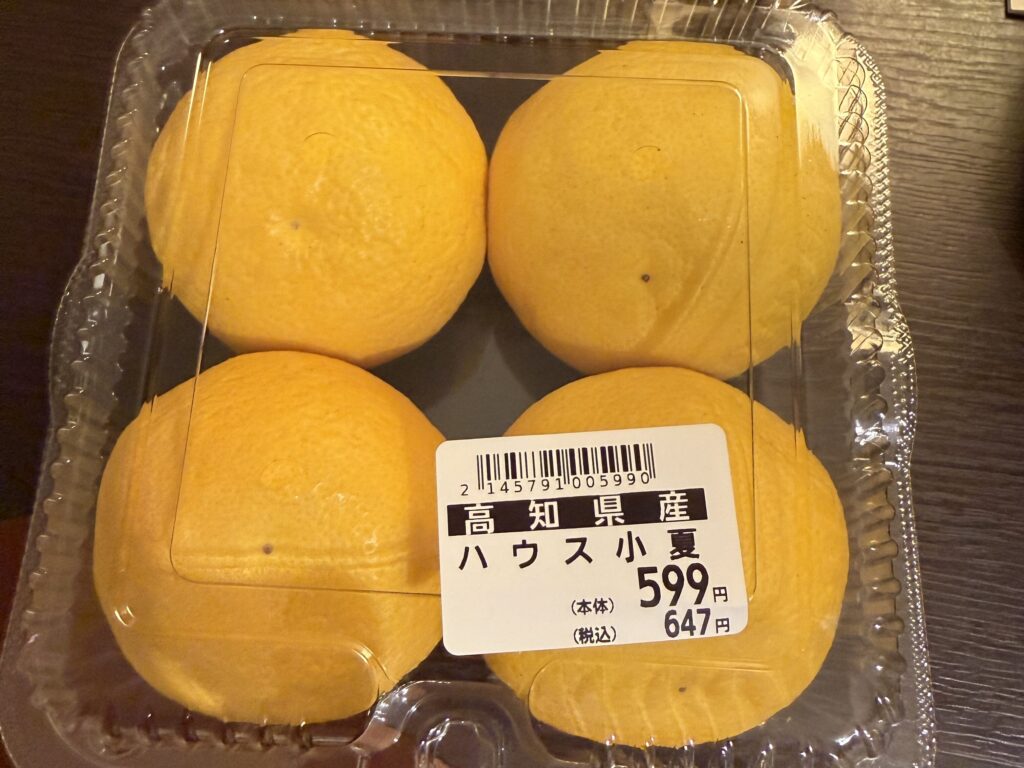
I bought sashimi, sushi, and konatsu, a Japanese citrus fruit, and ate them in my room at Kochi Hotel.
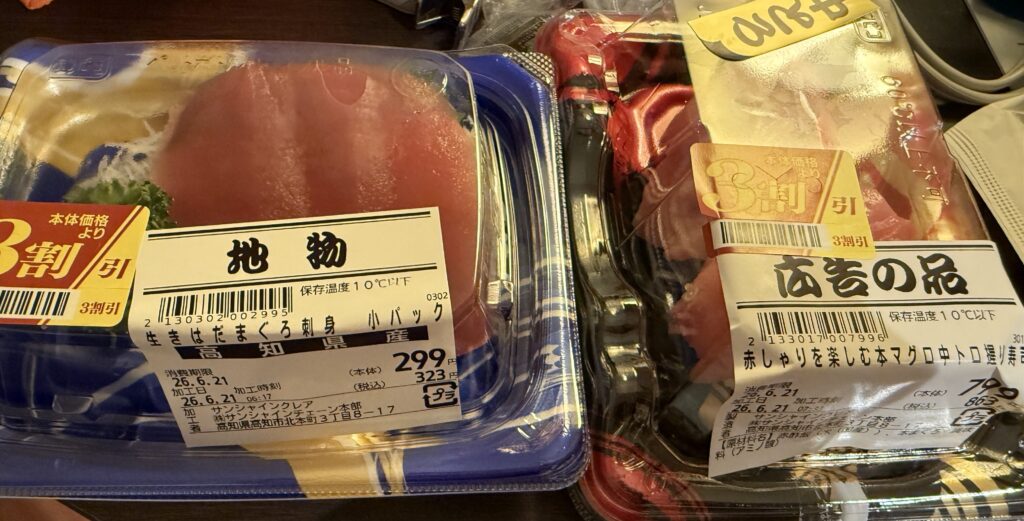
Buying local food at a supermarket and eating it at the hotel was an easy and enjoyable way to experience Kochi.
By the end of the day, I felt as if I had enjoyed Kochi’s food from morning until night.
Day 3: Returning to Kochi Ryoma Airport
On the final day, I headed to the airport for my morning flight.
I left Kochibashi at around 8:12 a.m. and arrived at Kochi Ryoma Airport at around 8:45 a.m.
I took flight JL0492, which departed from Kochi Ryoma Airport at 9:35 a.m.
I arrived at Haneda Airport at 10:55 a.m.
Kochi Is Easy to Visit Without a Rental Car
I did not rent a car during this Kochi trip.
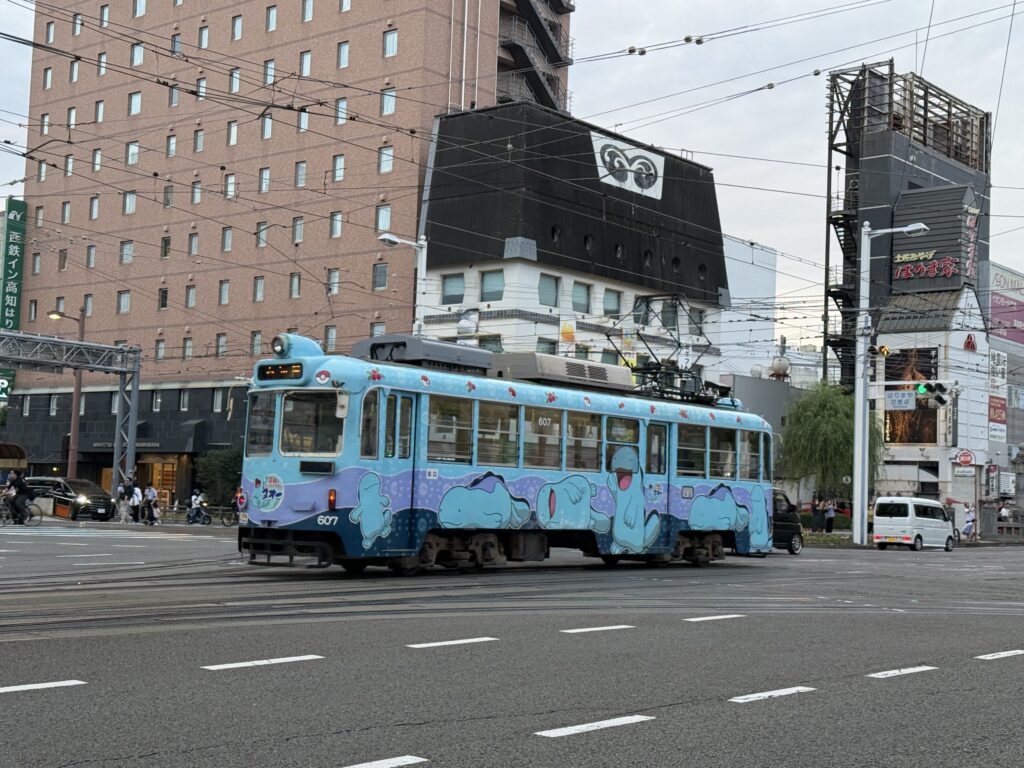
By combining streetcars, the MY Yu Bus, local buses, and walking, I was able to visit many tourist attractions around Kochi City.
However, some places are quite far apart, and buses may not run frequently. It is a good idea to check the latest timetables after deciding which places you want to visit.
The places I particularly enjoyed were Yamauchi Shrine and Makino Botanical Garden.
On the other hand, the distance from Kochi Castle to Imoya Kinjiro was quite long, so I do not recommend walking the entire way.
Staying near Kochi Station made it easy to travel to the airport and sightseeing spots, even as a solo traveler.
Kochi offers much more than local food such as bonito and yuzu. Visitors can also enjoy a historic Sunday Market, a castle, shrines, a temple on the Shikoku pilgrimage route, a botanical garden, and a beautiful beach.
Visitors should carry some Japanese yen because I encountered cash-only vendors at the Sunday Market and at some restaurants in Hirome Market.
One of the most memorable moments of the trip was realizing that Kochi was connected to the Studio Ghibli film Ocean Waves.
コメント